Facilitating Social Thinking Across the Day
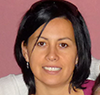
Stephanie Madrigal
https://s3-us-west-1.amazonaws.com//conferences201x/2010/mp3/Stephanie-Madrigal.mp3 This talk is designed for parents and professionals alike to understand the inner mind of persons high on the Autism Spectrum (Asperger Syndrome, PDD-NOS or high-functioning autism), ADHD, nonverbal learning disability (NLD or NVLD) or have no working diagnosis but they fit the clinical picture! Participants will learn not only functional treatment strategies they […]
Augmenting Communication… Expanding Communication
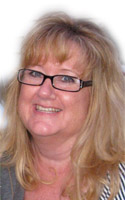
Darlene Hanson
https://s3-us-west-1.amazonaws.com//conferences201x/2010/mp3/darlene-hanson.mp3 This session will discuss current ideas and practices on augmenting communication for those with limited to no functional use of speech. We see how augmenting communication is building social and communicative skills, and for some supporting the development of speech. The process of assessment and selection of the “right system” can be overwhelming. I […]
Absolutely Your Child Can Be Toilet Trained! A Revolutionary Approach for Children with Autism Spectrum Disorders and Other Special Needs
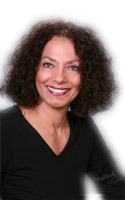
Debbie Bialer
https://s3-us-west-1.amazonaws.com//conferences201x/2010/mp3/debbie-bialer.mp3 Parents often become very frustrated and don’t understand why they would have their child sit on the toilet for hours or take him to the bathroom every half hour with no success. So, why is it that your current and this seemingly common sense approach fails? Because it is the change to the location […]
Neurologic Music Therapy: Rhythmic Applications for Autism
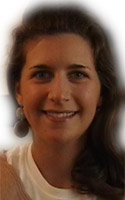
Peggy Schaefer
https://s3-us-west-1.amazonaws.com//conferences201x/2010/mp3/peggy-schaeffer.mp3 This presentation will explore autism as a movement and perceptual motor disorder, define neurologic music therapy (NMT) and discuss the science and impact of rhythm on the sensorimotor system. Standardized NMT techniques and their applications will also be presented.
Too Many Choices! How to Design a Multi-Treatment Approach to Educating and Supporting Children with Autism
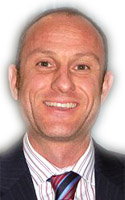
Jonathan Alderson
https://s3-us-west-1.amazonaws.com//conferences201x/2010/mp3/jonathan-alderson.mp3 Most agree that no single treatment works for all children and that most children on the spectrum benefit from more than one approach. With so many treatments to choose from, parents are left to piece together multi-disciplinary programming including biological, social, and cognitive strategies.
Learning With Autism: A Personal Viewpoint
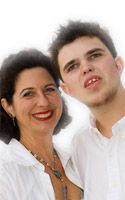
Chantal and Jeremy Sicile-Kira
https://s3-us-west-1.amazonaws.com//conferences201x/2010/mp3/jeremy-sicile.mp3 Jeremy has experienced home schooling, special education, general education and many different types of therapies in California, France and the UK, and has clear opinions about what has been helpful – and what has not – to someone like him. Jeremy gives his perspective and advice to those on the giving end of the […]
Meaning Deafness, Meaning Blindness, Body Disconnectedness; Agnosias in the Context of Autism
Donna Williams, Dip Ed, BA Hons
https://s3-us-west-1.amazonaws.com//conferences201x/2010/mp3/donna-williams.mp3 ‘Autism’ is one word but underlying autistic development and behaviour can be a ‘fruit salad’ of conditions. One of those is commonly Agnosias. Gnosia means ‘to know’. Agnosias are where the brain struggles to put meaning to incoming sensory information Understanding agnosias may demonstrate the wide diversity of autistic realities and challenge old and […]
A “Stranger” Among Us: Successful hiring of quality one-to-one providers for children or young adults with ASD
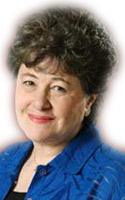
Lisa Lieberman
https://s3-us-west-1.amazonaws.com//conferences201x/2010/mp3/lisa-lieberman.mp3 Hiring one-to-one support for a child or young adult with ASD can seem overwhelming, but when done well, everyone wins. It requires time, and diligent care to ensure a child is safe and well nurtured. With 23 years of hiring providers for her husband with multiple sclerosis, and son with ASD, Lisa will share […]
How To Start Biomedical Intervention
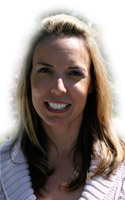
Rebecca Estepp
https://s3-us-west-1.amazonaws.com//conferences201x/2010/mp3/rebecca-estepp.mp3 This presentation will provide an overview of biomedical interventions for children with autism from a parent’s point of view. Get information on how to select a Defeat Autism Now (DAN) doctor. Learn the common medical issues found in autism and which medical tests address these issues. Learn more about diets, supplements and other treatments […]
Proactive Tools to Manage Challenging Behaviors of Children with Autism

Andrea Macken, M.A., B.C.B.A.
https://s3-us-west-1.amazonaws.com//conferences201x/2010/mp3/andrea-macken.mp3 Based on the principles of Applied Behavior Analysis, the presentation will provide parents, caregivers, and professionals proactive tools to manage their child’s challenging behaviors before they occur. In addition, attendees will learn to identify the patterns of their child’s challenging behaviors including the triggers and functions of these behaviors.